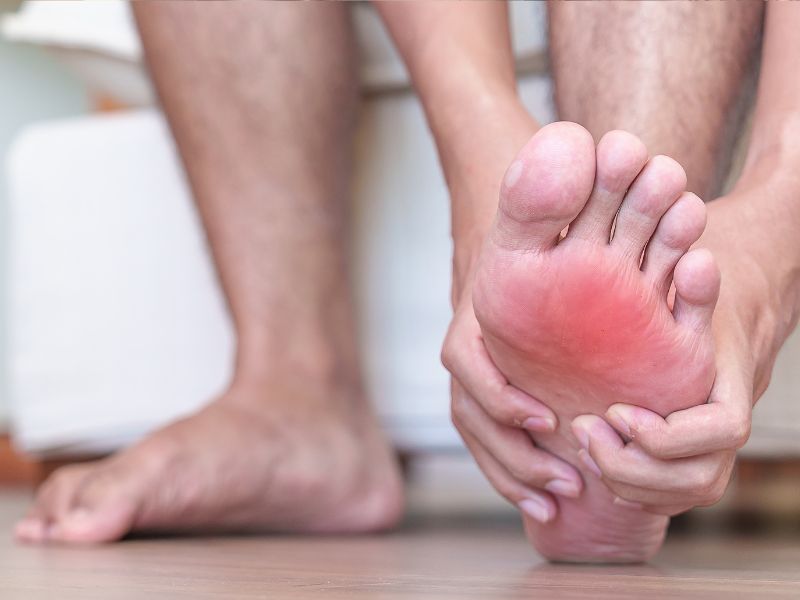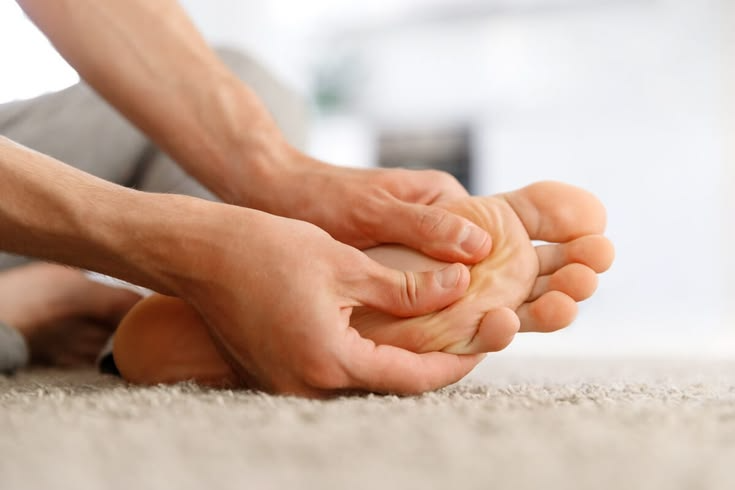


Pain located beneath the forefoot sometimes occurs after a long walk, while wearing narrow shoes, or during sports activities. When this pain becomes recurring, it may indicate Morton’s syndrome—a condition involving a nerve in the forefoot that becomes compressed between two metatarsal bones. .
Appropriate management begins with an analysis of the symptoms, how the foot bears weight, and footwear habits. Conservative treatments are the first line of approach. Surgery is only considered if pain persists despite a well-implemented medical treatment plan.
What is Morton’s syndrome?
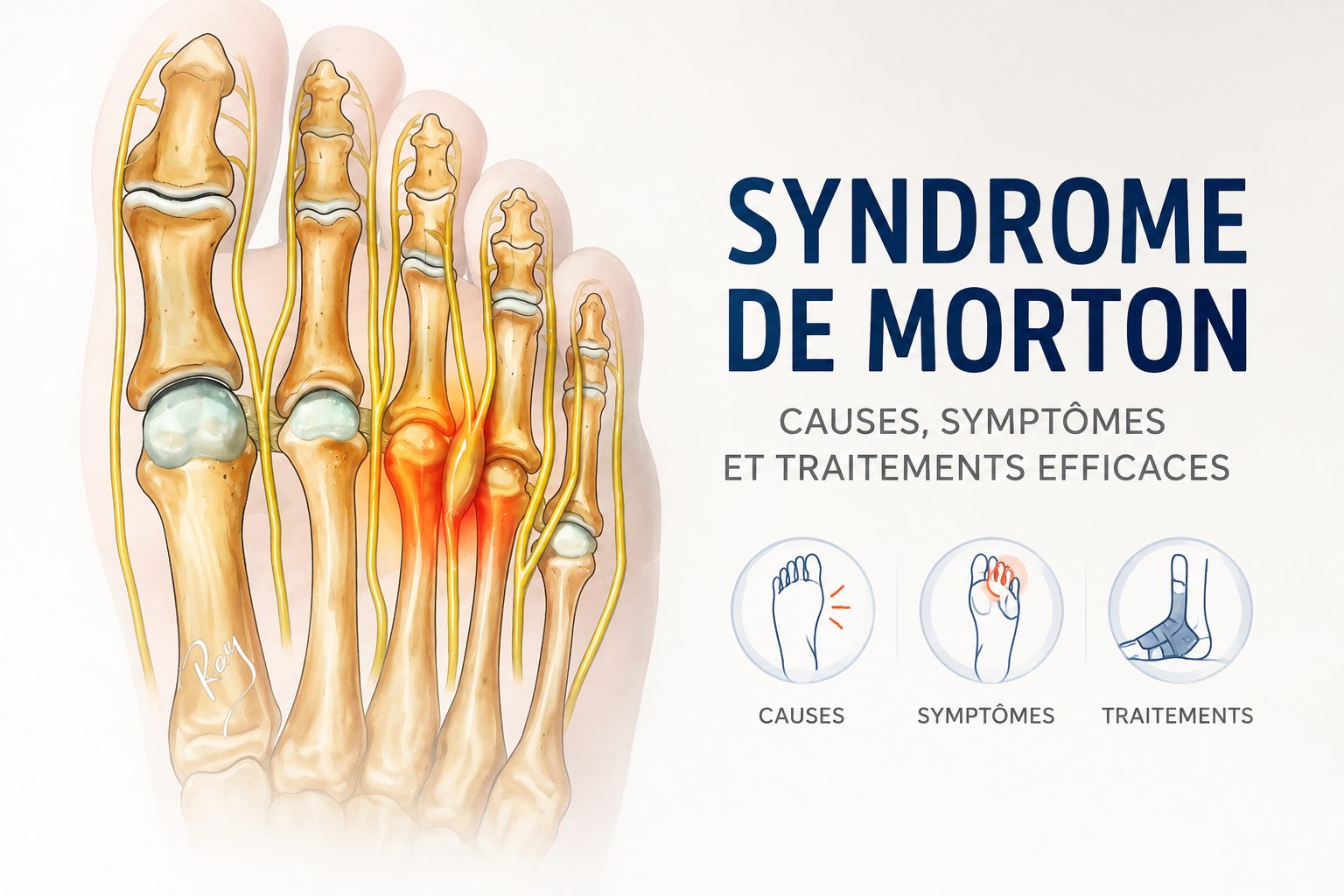
Morton’s syndrome involves the painful irritation of a nerve located in the forefoot. It is also known as Morton’s neuroma, Morton’s metatarsalgia, or an interdigital neuroma. In most cases, it is not a true tumor, but rather a thickening of the tissue surrounding the nerve This condition can interfere with walking, sports, and the ability to wear certain types of footwear.
Note: The more the nerve is compressed, the more irritated it becomes. As irritation increases, the surrounding tissues become increasingly sensitive. Consequently, pain may arise more quickly during physical activity or when wearing shoes that were previously comfortable.
What are the causes of Morton’s syndrome?
There are six factors associated with Morton’s syndrome:
Compression of the interdigital nerve
Compression of the interdigital nerve is the primary mechanism behind Morton’s syndrome. This compression results from an overly narrow space between the metatarsal bones, excessive pressure on the forefoot, or the the repeated rubbing of the nerve against adjacent structures..
Shoes that are too tight or have high heels
Narrow shoes promote compression of the forefoot. They push the metatarsal bones closer together, reducing the space available for the nerve. Pointed-toe shoes create a similar effect. High heels, in particular, shift the body’s weight toward the front of the foot, increasing pressure on the painful area.
Sports and activities involving repetitive impact
Activities that place significant stress on the forefoot can trigger or worsen Morton’s neuroma. Running, tennis, dancing, basketball, or any sport involving repeated jumping increases mechanical strain. Each impact transmits force to the weight-bearing area beneath the metatarsals.
Keep in mind: for athletes, the goal is not necessarily to stop the activity entirely. Instead, it is about identifying the movements that trigger the pain, adapting training routines, and choosing more protective footwear.
Flat feet, high-arched feet, and other deformities
The shape of the foot influences how pressure is distributed. Flat feetalter the axis of support,. while high-arched feet concentrate weight on the forefoot. Conditions such as claw toes or other foot deformities can also reduce the space between the metatarsals.
Foot injuries and trauma
Past injuries or repeated trauma can alter one’s gait..To avoid pain, a person may unconsciously shift their weight, creating a compensatory pattern—which can, in turn, overload the forefoot. Repeated micro-trauma then irritates the nerve and sustains inflammation.
Excess weight and pressure on the forefoot
Body weight increases the stress placed on the feet. When pressure is higher,the forefoot may be subjected to greater mechanical load, which exacerbates any existing compression.
What are the symptoms of Morton’s neuroma?
- The most common sign is pain located under the front of the foot. It typically occurs near the base of the toes, in the weight-bearing area. It may be subtle at first, then become more intense with walking. Some patients describe intermittent discomfort, while others experience sharper pain that forces them to stop.
- A burning sensation is highly suggestive of nerve irritation. It occurs between the toes or under the forefoot and intensifies when wearing narrow shoes.
- Les Electric shock-like sensationsindicate nerve irritation. They originate in the forefoot and radiate toward the toes; they can be brief but very intense.
- There may be a sensation of walking on a pebble, a marble, or a fold in one’s sock—an impression that persists even when the shoe is removed.
- Tingling or a "pins-and-needles" sensation may occur in the toes connected to the irritated nerve; this can be intermittent or associated with painful episodes.
Morton’s neuroma is aggravated by walking, running, standing, and wearing tight-fitting shoes. Conversely, resting, taking off one’s shoes, or reducing pressure on the foot helps alleviate the symptoms.
How is a Morton’s neuroma diagnosed?
Sometimes, a physician can reproduce the pain by compressing the forefoot or palpating the space between the metatarsals. The "Mulder sign" is also occasionally checked for; this consists of a painful click or "snap" felt when the forefoot is compressed.
Il arrive que le médecin reproduit la douleur en comprimant l’avant-pied ou en palpant l’espace entre les métatarsiens. Le signe de Mulder est parfois recherché. Il correspond à un ressaut ou un clic douloureux lors de la compression de l’avant-pied.
Ultrasound allows for the observation of the soft tissues in the forefoot and can be used to guide an injection, thereby increasing the precision of the procedure. An MRI is requestedonly in cases of uncertainty, primarily to rule out other potential, related causes..
How can Morton’s neuroma be relieved naturally?
Certain natural approaches can help alleviate Morton’s neuroma:
Wearing appropriate footwear
The primary step is to reduce compression. Shoes that are wide in the forefoot,stable, and comfortable help decrease pressure on the nerve. The front of the shoe should allow the toes to move freely. High heels and pointed-toe styles should be avoided, especially during painful episodes.
Using orthopedic insoles
Orthopedic insoles help optimize the distribution of weight-bearing forces. They reduce pressure beneath the metatarsals and limit compression of the nerve.They are particularly useful in cases of flat feet, high-arched feet, excessive forefoot loading, or gait abnormalities.
Adjusting physical activities
Physical activity should be modified based on the level of pain. High-impact sports may need to be limited during inflammatory phases, with a gradual return to activity possible once the pain subsides.
Resting the foot when pain occurs
Relative rest helps calm flare-ups. This may involve limiting long walks,avoiding prolonged standing, or temporarily reducing participation in sports that trigger pain.
What are the medical treatments for Morton’s neuroma?
- Analgesicsprovide relief from acute pain. While they improve comfort, they do not address the underlying nerve compression. Their use should always be tailored to the individual patient, taking into account their medical history and any other ongoing treatments.
- LCortisone injections may be recommendedwhen pain persists despite the use of appropriate footwear,,orthotic insoles, and physical therapy. These injections aim to reduce inflammation surrounding the nerve.
- Cortisone injections may be recommended when pain persists despite the use of appropriate footwear, orthotic insoles, and physical therapy. These injections aim to reduce inflammation surrounding the nerve.
In some cases, other types of injections—such as hyaluronic acid or botulinum toxin—may be considered. Whether these are appropriate depends on the clinical presentation and how the pain evolves over time.
When should surgery be considered?
Surgery for Morton’s neuroma is reserved for cases where pain persists despite a well-managed course of conservative treatment For example, if walking becomes severely limited, if specialized footwear is no longer sufficient, or if the patient’s quality of life remains significantly impaired.
Nerve decompression, involves freeing up the space around the nerve. The goal is to reduce pressure without necessarily removing the nerve itself. This procedure requires a precise analysis of the forefoot; the surgeon must determine whether the pain is primarily caused by a mechanical conflict that can be resolved through decompression.
Neurolysis, aims to free a nerve that has become compressed by surrounding tissues. By creating more space for the nerve, it seeks to reduce irritation. However, this technique often causes temporary discomfort following the procedure..
Neurectomy involves the removal of the painful portion of the nerve. It is one of the most frequently used surgical techniques for cases that do not respond to other treatments.