

Sore heel : what are the causes and how to relieve the pain
The heel is one of the most heavily used parts of the body in daily life. With every step, it absorbs a force equal to one to two times body weight. When running, that load can climb to three or four times body weight. It is hardly surprising, then, that this area is regularly the site of pain, sometimes disabling, that affects walking, work and quality of life in general. Heel pain is in fact one of the most common reasons for consultation in podiatry and sports medicine. Yet many people wait weeks or even months before trying to understand what is really going on. Identifying the precise cause of heel painis the essential starting point for choosing the right treatment and keeping the problem from becoming long-term.
Why does my heel hurt ? The main causes to know
Plantar fasciitis, the leading cause of heel pain
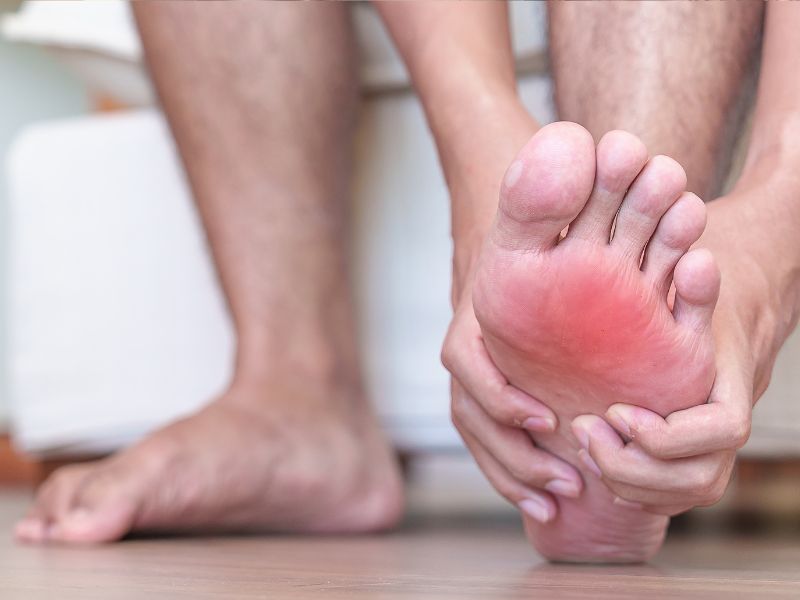
When it comes to heel pain, plantar fasciitis is almost inevitably at the heart of the matter. It is the most widespread cause, and it affects a very wide range of people, from distance runners to those who spend their days on their feet, as well as people who have returned to physical activity too quickly. The plantar fascia is a strong band of fibrous tissue that runs from the calcaneus, the heel bone, to the base of the toes. Its role is to support the arch of the foot and cushion shock with every impact. When it is overworked, it becomes inflamed where it attaches to the heel, causing a characteristic pain: intense with the first step in the morning, easing after a few minutes of walking, then coming back strongly after prolonged exertion or standing for a long time.
Several factors increase the risk of developing plantar fasciitis. Flat feet or high arches change how pressure is distributed on the fascia. Excess weight mechanically increases the load. Tight calf muscles or Achilles tendons put extra tension on the heel attachment. Wearing shoes without arch support or sufficient cushioning is also a very common aggravating factor in everyday life.
Heel spurs and their misunderstandings
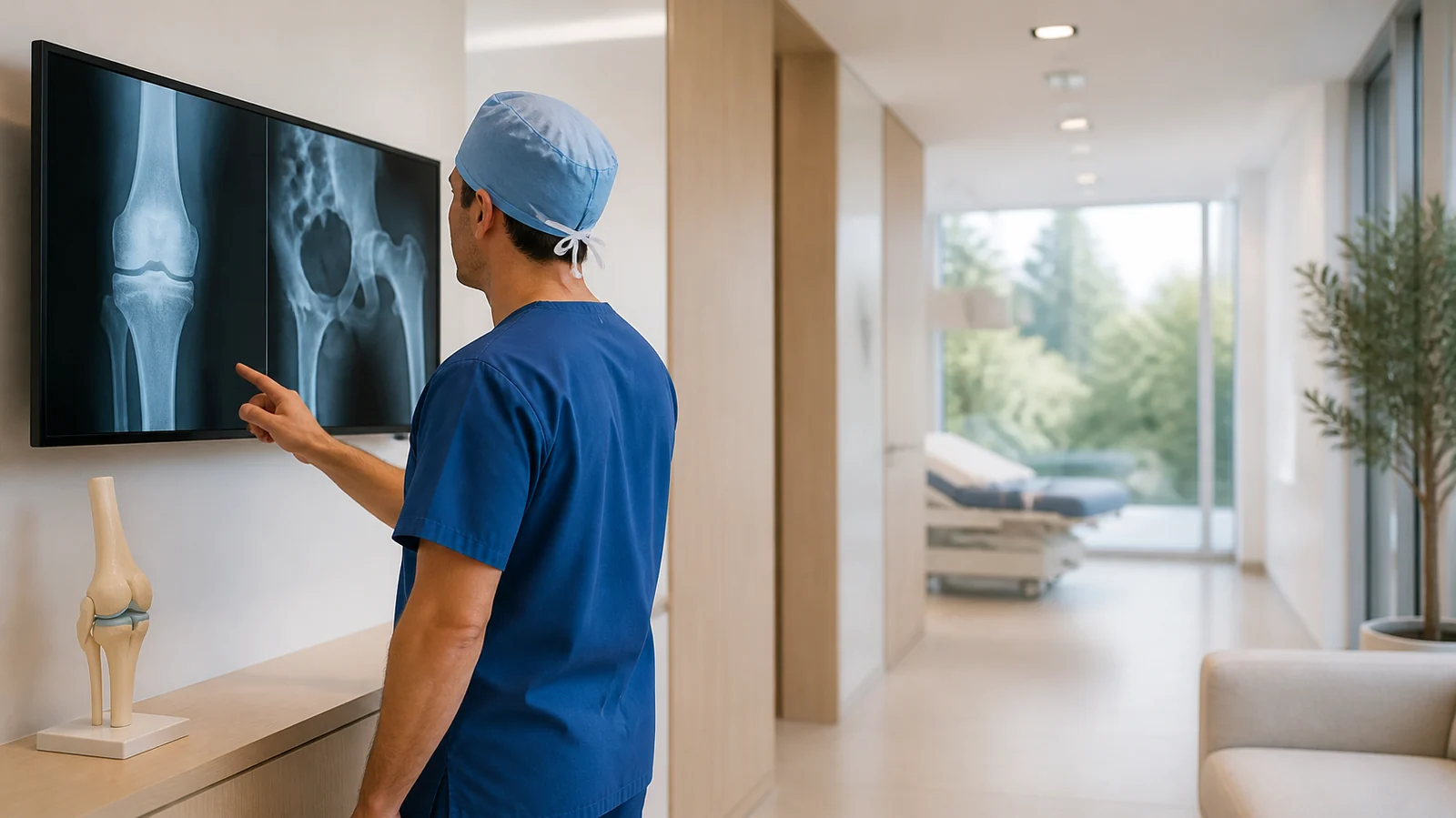
A heel spur, also called a calcaneal spur, is a bony outgrowth that forms on the calcaneus as a result of repeated tension from the plantar fascia. It is often discovered by chance on an X-ray and immediately suspected of causing the pain in the heel. The reality is more nuanced. A large number of people have a heel spur without ever feeling any discomfort. It is not the spur itself that hurts, but the inflammation of the structures around it. It is therefore important not to fixate on this X-ray finding and to treat the real cause of the pain, that is, the condition of the fascia and adjacent tissues, rather than targeting the bony outgrowth itself.
Achilles tendinopathy
The Achilles tendon connects the calf muscles to the calcaneus and transmits all of the propulsive force with every step. When it is subjected to repeated stress without enough recovery, it develops tendinopathy, which shows up as pain at the back of the heel, that is, at the rear of the foot rather than underneath. This pain is often accompanied by morning stiffness, palpable thickening of the tendon and increased tenderness when it is pressed. Achilles tendinopathy is especially common in runners and in athletes who play sports involving jumping, but also in people who suddenly increase their level of physical activity or regularly wear high heels.
Stress fracture of the calcaneus
Less well known to the general public, a stress fracture of the calcaneus is nonetheless a serious cause of heel pain that should not be overlooked. It occurs not after a sudden impact but after an accumulation of repeated microtrauma to the bone, which eventually cracks gradually. It is common in military personnel on long marches, runners who have increased their training volume too quickly, and people with osteoporosis. The pain is diffuse, deep and clearly worsens with activity. The diagnosis can only be made with appropriate imaging, often an MRI or a bone scan, because a stress fracture is rarely visible on a plain X-ray.
Less common causes that shouldn’t be overlooked
Other conditions can cause heel pain that it would be unwise to ignore. Retrocalcaneal bursitis is an inflammation of a small bursa located between the Achilles tendon and the heel bone, often caused by repeated rubbing from an ill-fitting shoe. Tarsal tunnel syndrome is a compression of the posterior tibial nerve as it passes behind the inner ankle bone, producing pain and tingling that radiate toward the sole and the heel. Finally, certain systemic diseases such as rheumatoid arthritis, spondyloarthritis or psoriatic arthritis can first show up as heel pain, notably through enthesitis, meaning inflammation at the point where a tendon attaches to bone.
How to relieve a sore heel day to day
First steps to take at home
Even before seeing a healthcare professional, a few simple steps can reduce the intensity of the pain and keep things from getting worse. The most important measure is relative rest : this does not mean staying completely off your feet, but avoiding activities that cause or intensify the pain, especially running, long walks on hard surfaces and standing for long periods without a break.
Footwear is an often underestimated lever. Wearing shoes with a thick, shock-absorbing sole and proper arch support makes a real difference to the pain you feel day to day. Conversely, walking barefoot on tile or hard floors, or wearing flat shoes with no cushioning, consistently aggravates plantar fasciitis or tendinopathy. During periods of acute pain, silicone heel cups placed in your shoes can bring immediate relief by absorbing shock at the calcaneus.
Applying local cold using ice cubes wrapped in a cloth or a frozen water bottle that you roll your foot over for ten to fifteen minutes, is a simple and effective way to reduce inflammation and ease pain after activity or at the end of the day.
Stretching, a valuable ally
Stretching the plantar fascia and calf muscles is probably the most beneficial exercise for managing heel pain of mechanical origin. It reduces the tension on the heel attachment and improves the overall flexibility of the back of the lower leg. Ideally, do it before your first steps in the morning, when the pain is usually at its worst, and after each prolonged period of rest.
Here are the two most effective stretches, and the easiest to fit into a daily routine:
- Sitting on the edge of the bed, grab your toes and gently pull your foot toward you for twenty to thirty seconds to stretch the plantar fascia.
- Standing facing a wall, place both hands flat against it and step one leg back, keeping it straight and pressing the heel toward the floor, to stretch the calf and the Achilles tendon.
These stretches should be done gently, without forcing, and gradually, two to three times a day for best results.
When medical care becomes necessary
The central role of the podiatrist
The podiatrist is the go-to professional for heel pain of mechanical origin. They assess the shape of the foot, analyze the gait and carry out a complete podiatric evaluation. Based on this examination, they can design custom orthotic insoles that correct postural imbalances, relieve the painful area and redistribute pressure more evenly across the whole foot. These plantar orthoses are often the most effective long-term treatment for recurrent plantar fasciitis or chronic heel pain.
Physical therapy and physical treatments
Physical therapy brings complementary techniques that are particularly useful in forms that resist simple measures. Radial shock wave therapy is now widely used to treat chronic plantar fasciitis and Achilles tendinopathy. It involves sending mechanical waves into the tissues to stimulate cell regeneration and reduce local inflammation. Results are often significant after a few sessions. The physical therapist can also work on muscle stiffness, proprioception and retraining for exercise to prevent recurrence.
Medical and surgical treatments
In stubborn inflammatory forms, the doctor may offer a corticosteroid injection at the painful site for quick relief. This procedure, performed under ultrasound guidance for optimal accuracy, is effective but should remain occasional, because repeated injections weaken the tissues. For the most severe cases, especially chronic plantar fasciitis or genuinely compressive heel spurs that do not respond to any conservative treatment after several months, surgery may be considered. It remains rare, however, and is always a last resort.
Conclusion: act early before a sore heel settles in
Having a sore heel is an extremely common problem, but it would be wrong to see it as inevitable or without a solution. In the great majority of cases, early care that combines appropriate rest, suitable footwear, regular stretching and a visit to a healthcare professional can overcome it within a few weeks. The trap is waiting too long in the hope that it will resolve on its own, because chronic heel pain takes far longer and is far more complex to treat than recent pain. As soon as the pain lasts beyond two weeks or affects you every day, seeing a professional remains the best decision for your foot and for your overall well-being.