


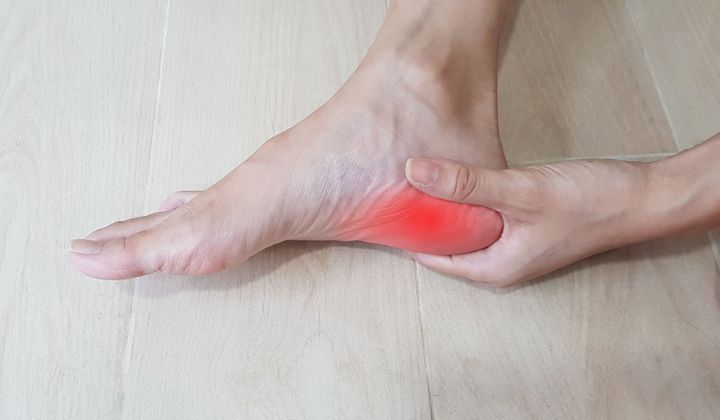
Pain under the heel: when should you see a specialist ?
Getting out of bed in the morning and wincing as your foot hits the floor is an experience many people know without really worrying about it. We put it down to tiredness, long days on our feet, shoes that aren’t comfortable enough. And sometimes it really is temporary. But when pain under the heel sets in, comes back every morning, gets worse after exercise or disrupts the way you walk, it becomes hard to keep ignoring it. This specific area of the foot contains complex anatomical structures that can become strained or inflamed for a wide variety of reasons. Knowing how to tell a harmless discomfort from a condition that needs medical attention is essential so that an injury doesn’t quietly get worse.
What it really feels like to have pain under the heel
Plantar pain under the heel doesn’t feel the same for everyone, nor for every cause. Some people describe a burning sensation in the center of the heel, others a throbbing pain that radiates toward the arch, and others a stabbing, knife-like feeling with the first steps in the morning that gradually eases after a few minutes of walking. This last pattern is particularly characteristic and worth noting, because it often corresponds to a very specific condition.
The exact location of the pain already provides valuable clues. Pain under the heel, in the center or slightly toward the front, points to plantar fasciitis or a problem at the fascia’s attachment. Pain located further back, at the rear of the heel, may signal bursitis or Achilles tendinopathy. Diffuse pain with tingling suggests nerve involvement. These nuances matter because they guide the diagnosis and, in turn, the treatment.
The most common causes of pain under the heel
Plantar fasciitis: the main culprit
Plantar fasciitis is without doubt the most common cause of pain under the heel. It is an inflammation of the plantar fascia, the thick ligament-like band that runs from the heel to the base of the toes and acts as a natural shock absorber for the arch of the foot. When this tissue is subjected to excessive, repeated stress, it develops micro-tears where it attaches to the calcaneus, causing a painful inflammatory reaction. The pain is typically at its worst in the morning when you get up or after a long period of rest, then tends to ease after a few steps before returning with prolonged activity.
This condition affects athletes and sedentary people alike, and several contributing factors are well identified: excess weight, which increases the mechanical load on the foot; high arches or flat feet; prolonged wear of shoes without arch support; excessive walking or running without gradual preparation; and tight calf muscles that put extra tension on the fascia.
Heel spurs: myth or painful reality ?
A heel spur is often cited whenever heel pain comes up, sometimes wrongly. It is a bony outgrowth that forms on the calcaneus where the plantar fascia and certain muscles attach. It is visible on an X-ray and can be worrying, but it is not necessarily painful. Many people have a heel spur without ever feeling any discomfort. It is the inflammation of the surrounding tissues that causes the pain, not the bony spur itself. Confusing the two can lead to inappropriate treatment, or even unnecessary surgery.
Subcalcaneal bursitis
Less well known than plantar fasciitis, calcaneal bursitis is an inflammation of a bursa located under the heel, whose very job is to cushion pressure. When it is repeatedly irritated, especially by ill-fitting shoes or prolonged standing on hard surfaces, it swells and becomes painful. The pain is then often felt under the heel, sometimes with a sense of swelling or localized warmth. This condition needs relative rest and appropriate care so that it doesn’t become chronic.
Compression of Baxter’s nerve
Rarer but frequently underdiagnosed, compression of Baxter’s nerve is a neurological cause of pain under the heel. This nerve, a branch of the posterior tibial nerve, can be pinched as it passes through the foot, producing pain that can perfectly mimic plantar fasciitis. What sets this condition apart is the possible presence of tingling, numbness, or pain that does not respond to the usual treatments for fasciitis. Identifying this cause sometimes requires an electromyogram or a targeted MRI, which is why a thorough medical evaluation matters when pain resists standard care.
When should you really see a specialist ?
This is the central question, and it deserves a clear and nuanced answer. Not every pain under the heel justifies an immediate consultation, but certain warning signs should not be ignored.
Here are the situations in which you should book an appointment without delay:
- The pain has lasted more than two weeks without improvement despite rest and simple measures.
- The pain is intense, sudden or associated with a direct injury to the heel.
- Tingling, numbness or weakness in the foot accompanies the pain.
- Walking is significantly disrupted or your gait has changed.
- The pain wakes you at night or is present at complete rest.
Beyond these warning signs, persistent pain under the heel that interferes with daily life, even if it is not urgent, deserves medical attention. Waiting for it to go away while continuing to put strain on the foot is one of the most common mistakes, and it often turns an acute condition into a chronic one that is much harder to treat.
What happens during the consultation and diagnosis ?
The doctor or podiatrist starts with a detailed interview about the pattern of the pain: when it appears, in what circumstances, how long it has been going on, how intense it is, and what relieves or aggravates it. This information is valuable and already points strongly toward a diagnosis even before the clinical examination.
The foot examination then pinpoints the tender area by palpation, assesses the flexibility of the calf and fascia, and looks at the shape of the foot and the quality of the gait. In some cases, additional tests are needed. A heel X-raycan show a heel spur or a stress fracture. A plantar ultrasound is the reference test for showing thickening of the fascia and confirming fasciitis. MRI is reserved for resistant or atypical cases, to obtain a more complete picture of the structures involved.
Available treatments to relieve pain under the heel
The good news is that the great majority of cases of pain under the heel respond well to properly managed conservative treatment. The goal is to reduce inflammation, ease mechanical stress and allow the injured structure to heal properly.
Relative rest is the first step, avoiding activities that aggravate the pain without condemning yourself to total inactivity. Customorthotic insoles, made by a podiatrist, play a central role in treatment: they correct foot posture problems, relieve the painful area and redistribute pressure more evenly. Stretching of the plantar fascia and calf, done regularly and correctly, reduces the tension on the heel attachment and speeds up recovery.
Physical therapy offers effective complementary techniques: therapeutic ultrasound, radial shock wave therapy for chronic forms, fascia massage and proprioception work. Corticosteroid injections may be offered in persistent inflammatory forms, with a pain-relieving effect that is often quick, but repeat injections are limited because of the risk of weakening the tissues. In the rare cases where all of these treatments remain insufficient, surgery may be discussed, notably to release the fascia or remove a compressive heel spur.
Mistakes to avoid when you have pain under the heel
Several behaviors delay healing and are worth pointing out. Continuing to walk or run while forcing a painful foot is mistake number one: pain is a signal, not an obstacle to overcome through willpower. Wearing flat shoes, flip-flops or other footwear with no cushioning or arch support consistently aggravates plantar fasciitis. Overly vigorous self-massage, or applying heat to an acutely inflamed area, can also sustain the inflammation rather than calm it. And of course, putting off a consultation in the hope that it will go away by itself is a risky strategy once the pain has settled in for the long haul.
Conclusion: don’t let the pain dictate your daily life
Pain under the heel is far from inevitable. Whether it is early plantar fasciitis, bursitis or nerve involvement, solutions exist and, in the great majority of cases, allow you to get back to a functional, pain-free foot. The key is early treatment. The longer you wait, the more your tissues adapt to a compensatory way of working that ends up creating other imbalances, sometimes in the knee, hip or lower back. Seeing a healthcare professional as soon as the pain sets in or resists the first simple measures gives you the best chance of healing quickly and well.