


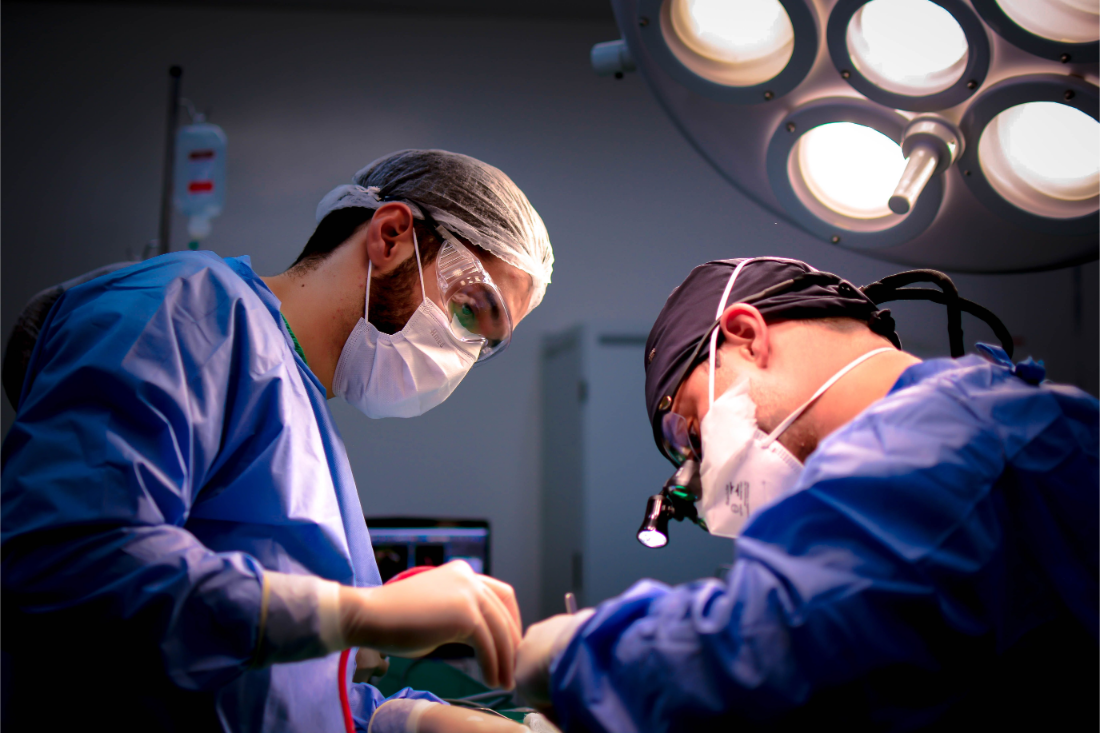
When a fracture fails to heal, when a joint’s cartilage wears away irreversibly, when a ligament gives way under stress, or when a bone deformity compromises mobility, an orthopedic surgeon is the specialist to consult. This medical expert focuses on the musculoskeletal system in all its complexity: bones, joints, muscles, tendons, ligaments, and peripheral nerves all fall within their scope of practice. Their role extends beyond performing surgery; they diagnose, evaluate, and provide guidance and when surgery is necessary, they intervene with a level of precision that directly influences their patients' quality of life. Understanding what an orthopedic surgeon actually does, when to seek their expertise, and the types of procedures they perform can help patients approach potential treatment with much greater peace of mind.
From General Medicine to Orthopedic Surgery: A Long Path of Training
Becoming an orthopedic surgeon requires a significant academic and practical commitment. Following six years of general medical studies common to all medical specialties the aspiring surgeon enters a five-year residency program in orthopedic and trauma surgery. These years of specialization are dedicated to mastering fundamental surgical techniques, gaining an exhaustive understanding of the musculoskeletal system’s anatomy, and learning to manage complex situations in the operating room. Many surgeons further extend their training through one or more fellowships periods of sub-specialization lasting one to two years focusing on specific areas such as knee, hand, or spinal surgery. In total, it often takes fifteen years or more after completing secondary education to become fully qualified to practice in this specialty. This duration is not insignificant; it reflects the technical complexity and the high stakes involved in this field.
What is the exact role of an orthopedic surgeon?
Diagnosing and evaluating before operating
Contrary to what one might imagine, an orthopedic surgeon does not spend the majority of their time in the operating room. A significant portion of their work is dedicated to consultations, where they examine patients, analyze symptoms, interpret imaging studies, and establish precise diagnoses. Their clinical eye is trained to identify what an X-ray, MRI, or CT scan reveals about the condition of bone and joint structures, as well as to recognize what can be learned through a physical examination alone. Palpation, mobility tests, muscle strength assessments, and gait analysis are all diagnostic tools used daily during consultations.
The surgeon also ensures a reasoned approach: surgery is never the first response to an orthopedic problem. Before proposing an intervention, the orthopedic surgeon evaluates whether conservative treatments such as physical therapy, orthotics, injections, or medication might be sufficient to resolve the issue or provide enough symptom relief. This approach is fundamental, as every surgery carries risks, and an unnecessary procedure is always one too many.
Coordinating comprehensive patient care
An orthopedic surgeon rarely works alone. They are at the center of a multidisciplinary team that may include rehabilitation physicians, physical therapists, podiatrists, rheumatologists, anesthesiologists, and, in cases involving bone tumors, oncologists. This coordination is essential to ensure consistent care, from the diagnostic phase through to post-operative rehabilitation. He refers his patients to the appropriate specialists, prescribes relevant diagnostic tests, and provides long-term follow-up to ensure that surgical outcomes are maintained over time.
Major specialties within orthopedic surgery
Knee surgery is one of the most active specialties. It encompasses the reconstruction of cruciate ligaments common among athletes as well as meniscectomies, cartilage surgery, and the implantation of total or partial knee prostheses for patients suffering from severe osteoarthritis. Hip surgery primarily involves the implantation of total hip prostheses—one of the most frequently performed orthopedic procedures in developed countries as well as the treatment of hip fractures/femoral fractures, which are particularly common among the elderly.
A knee surgery est l’une des spécialités les plus actives. Elle regroupe la reconstruction des ligaments croisés, fréquente chez les sportifs, les méniscectomies, la chirurgie du cartilage et la pose de prothèses totales ou partielles du genou pour les patients souffrant d’arthrose sévère. La chirurgie de la hanche concerne principalement la pose de prothèses totales de hanche, l’une des interventions les plus pratiquées en orthopédie dans les pays développés, mais aussi les fractures du col du fémur, particulièrement fréquentes chez les personnes âgées.
Shoulder surgery addresses rotator cuff tears, recurrent joint instability, subacromial impingement, and increasingly the implantation of anatomical or reverse shoulder prostheses. Spinal surgery is a distinct subspecialty that manages conditions such as herniated discs, spinal stenosis, vertebral deformities (e.g., scoliosis), and vertebral fractures. Finally, hand and wrist surgery is a field requiring extreme precision; it deals with nerve entrapment syndromes, complex fractures, tendon ruptures, and rheumatic conditions affecting the hand.
The most common procedures in orthopedic surgery
Joint replacement (arthroplasty)
Joint replacement is arguably the most iconic procedure in orthopedic surgery. Whether for the hip, knee, or shoulder, the principle remains the same: an artificial implant replaces a joint where the cartilage has been destroyed by debilitating osteoarthritis, thereby restoring mobility and eliminating pain. Outcomes for this type of surgery are now remarkable, with very high patient satisfaction rates and implants that can last for more than twenty years. Surgical techniques have evolved significantly, with increasingly minimally invasive approaches that help reduce postoperative pain and shorten hospital stays.
Knee ligament and meniscus surgery
Anterior cruciate ligament (ACL) reconstruction is one of the most frequently performed procedures in sports-related orthopedic surgery. This procedure is intended for patients often young and active who have suffered a rupture of this ligament, typically during a pivoting movement or a sports-related injury. The surgeon reconstructs the ligament using a graft taken from the patient’s own body, most commonly harvested from the tendons of the *pes anserinus* (hamstring tendons) or the patellar tendon. Meniscal surgery, meanwhile, involves either suturing a torn meniscus or performing a partial meniscectomy (removing the damaged portion). Both procedures are now performed via arthroscopy, a minimally invasive technique that uses a camera and slender instruments inserted into the joint through tiny incisions which significantly improves the post-operative recovery experience.
Orthopedic Traumatology
Traumatology represents a major part of an orthopedic surgeon’s practice, particularly in a hospital setting. Whether dealing with fractures of the wrist, femur, ankle, or clavicle, or complex fractures of the pelvis or spine, the orthopedic surgeon is called upon often on an urgent or semi-urgent basis to stabilize fractures through osteosynthesis. This involves securing bone fragments in place using plates, screws, pins, or intramedullary nails. The quality of the fracture reduction and the stability of the fixation directly determine how well the bone heals and whether any long-term complications or residual impairments may arise.
Spinal Surgery
Spinal surgery encompasses a wide range of procedures, from simple discectomies performed to free a nerve compressed by a herniated disc to complex spinal arthrodeses (fusions), which join multiple vertebral levels to correct a deformity or stabilize an unstable spine. These operations are performed under a microscope or surgical loupes to ensure maximum precision; even the slightest error near neural structures can lead to serious functional consequences. Minimally invasive techniques have also made their way into this field, utilizing muscle-sparing approaches that significantly reduce postoperative pain and recovery time.
When should you see an orthopedic surgeon ?
A consultation with an orthopedic surgeon is indicated in several situations. Persistent joint or bone pain that does not respond to standard treatments warrants a specialized evaluation. A recent injury resulting in deformity, loss of function, or intense pain requires prompt medical attention. For diagnosed Osteoarthritis that progresses despite conservative treatments and significantly impacts one’s quality of life, a surgical solution may be considered. Degenerative spinal conditions involving nerve compression, tendon ruptures confirmed by imaging, or recurrent joint instability are also common reasons for an orthopedic consultation.
There is no need to wait until a situation becomes dire before scheduling an appointment. Seeking an early consultation can often help avoid surgery by leading to an appropriate conservative treatment plan, or, if surgery is necessary, it allows for the procedure to be performed under better conditions before the damage becomes too extensive to permit a satisfactory repair.
Conclusion: An essential specialist for quality of life
The orthopedic surgeon plays a central role in the care pathway for millions of patients suffering from musculoskeletal conditions. Their extensive training, technical mastery, and comprehensive approach to the patient make them an indispensable figure whether in managing traumatic emergencies or in the planned treatment of degenerative or sports-related conditions. Far from being merely a practitioner who works in the operating room, the orthopedic surgeon is, above all, a physician who carefully weighs every therapeutic decision, placing the patient’s quality of life at the heart of their priorities. Consulting an orthopedic surgeon at the right time often provides the best chance of regaining satisfactory mobility and returning to an active, pain-free life.