


When surgery is necessary, our team does everything possible to ensure that it takes place under the best possible conditions. Once the procedure is completed, it will be your turn to take a few precautions to ensure the full success of your operation. Please follow these essential instructions for a good recovery:
Recovery
A surgical procedure is a stressful experience for your body. In order to recover from this stress, it is important to rest and allow your body to heal. We recommend minimizing movement as much as possible during this period.
Healing
After surgery, you need to give yourself time to heal. There is a healing time for the skin (about 3 weeks) and for the bone (about 3 months).
Shoes and walking sticks
When movement is necessary, you must wear the shoe we provide or the cast, and use walking sticks.
Leg elevation
To avoid any complications such as edema (water retention), it is important to keep your leg elevated above the knee as soon as you leave the clinic.
However, it is common for swelling to persist even after the pain from the surgery has subsided, and this should not be a cause for concern.
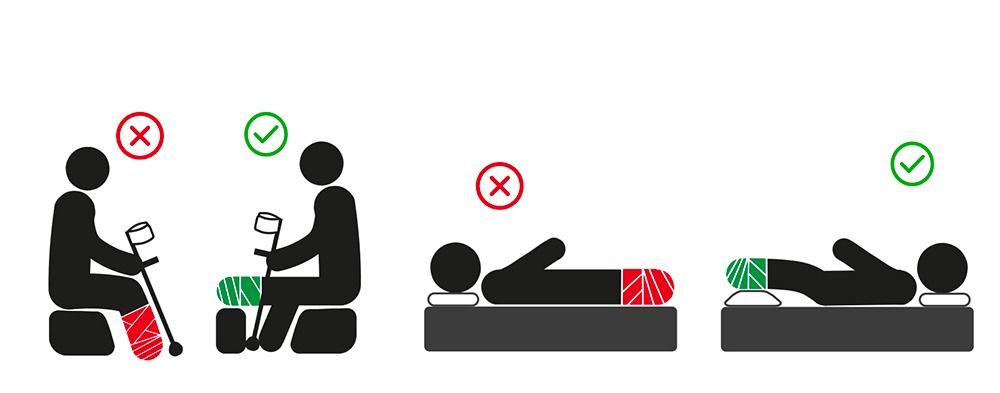
It is important to realize that the leg and foot are parts of the body that are heavily used. Our feet support us all day long and bear the weight of our body with every step, all on an area with very little muscle, made up mainly of bones and ligaments.
Did you know, for example, that the total weight carried by our feet each day is equivalent to 337 African elephants or 3 Airbus A-380s? This comparison clearly illustrates the importance of not neglecting the rest period after surgery.
A post-operative follow-up is arranged after your surgery, and these appointments will provide an opportunity to discuss your recovery progress and any questions you may have with the nurses.