


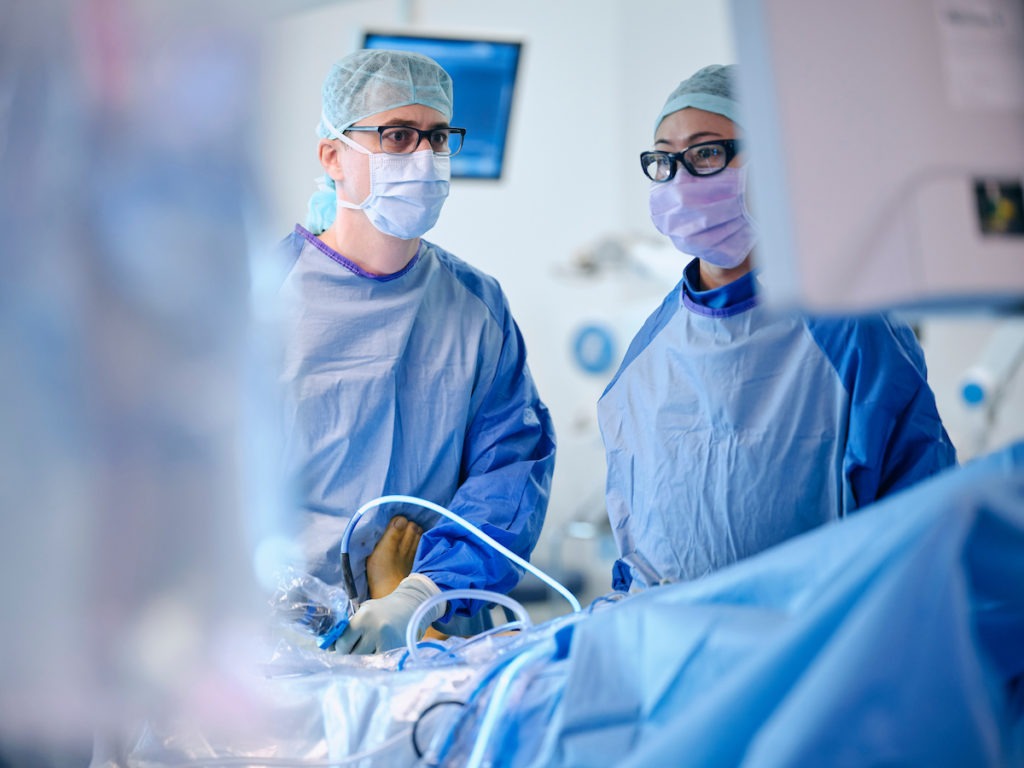
Following recurrent ankle sprains, persistent pain may occur due to impingements, either of soft tissues or bone, located at the front (anterior) or back (posterior) of the joint. Arthroscopy allows for the targeted identification and treatment of these impingements by precisely accessing the affected area and releasing the structures responsible for the pain — all through minimally invasive incisions.
The Achilles tendon may develop chronic inflammation, either within the tendon itself or at its insertion on the calcaneus. Arthroscopy allows for a targeted intervention on the tendon sheath or the insertion site, effectively treating the pain while minimizing surgical trauma.
Arthroscopy allows for precise visualization and optimal preparation of the joint surfaces, particularly in procedures such as ankle fusion or subtalar fusion.
Ligament stabilization can be performed under arthroscopic guidance, allowing direct and precise visualization of the involved structures for optimal correction of the instability.